Case study: blueflite
Taking hydrogen powered drones to the skies
Drone technology innovator blueflite is advancing its hydrogen-powered logistics capabilities in Darwin.
Background
Founded in the United States in 2018, blueflite is revolutionising the logistics and delivery sector through its advanced cargo drone platform. The company is now extending its footprint to Australia’s Northern Territory.
blueflite has scoped a project with Charles Darwin University (CDU) to develop a carbon-fibre hydrogen fuel tank vessel for its drone fleet. This partnership aligns with the Northern Territory’s ambitions to lead in autonomous systems and advanced manufacturing, leveraging our proximity to Southeast Asia.
Opportunity
The future of drone logistics depends on ultra-light, sustainable fuel solutions.
The Northern Territory seeks to strengthen its innovation ecosystem, support advanced research and development partnerships, and accelerate its role in emerging and advanced manufacturing industries, such as hydrogen, autonomous systems and logistics.
Approach
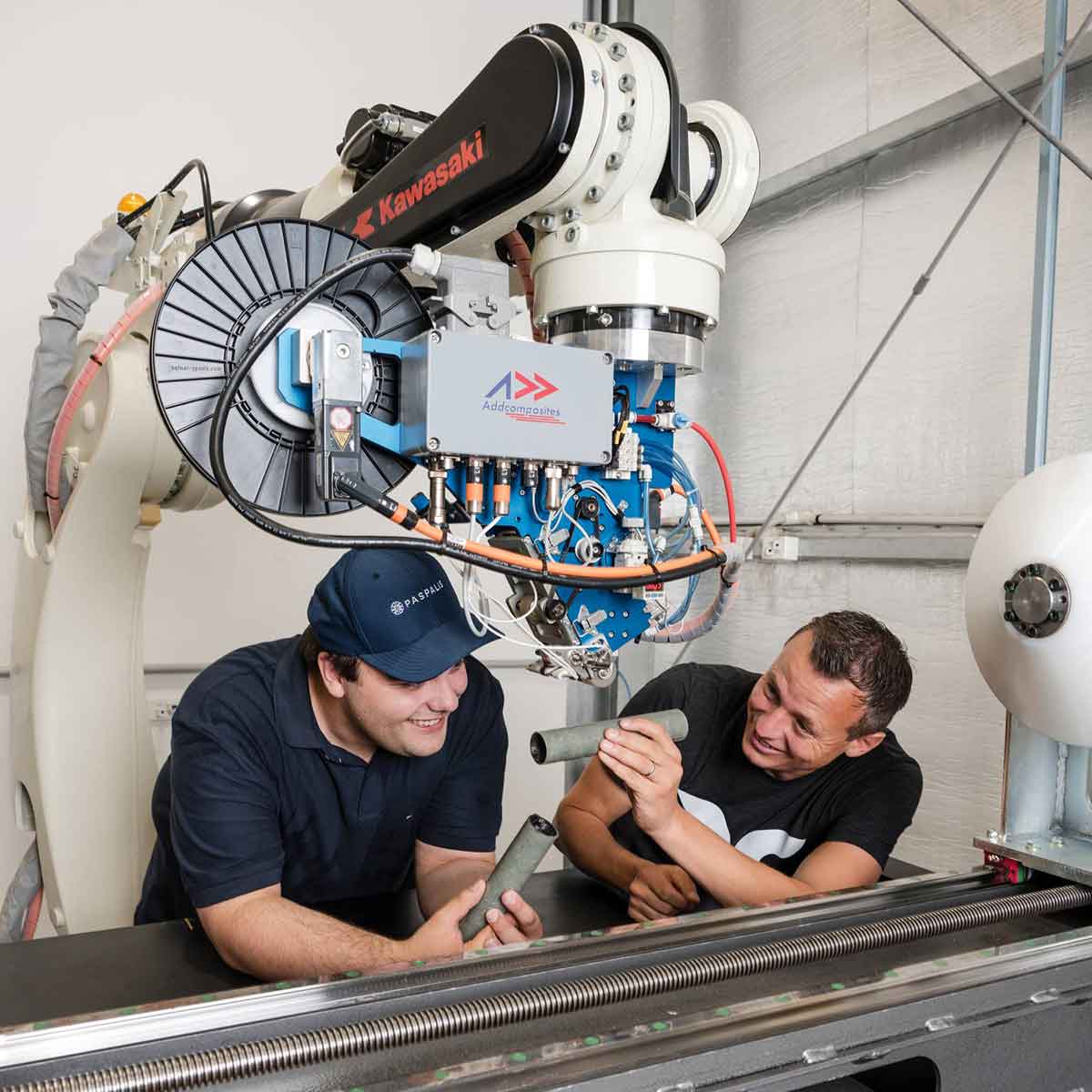
blueflite engaged with CDU to explore cutting-edge carbon fibre robotic technology through the North Australian Centre for Autonomous Systems (NACAS).
Solution
blueflite’s development in the Top End is supported by a joint commitment from Paspalis Capital and the Northern Territory Government.
This co-investment is enabling world-first prototyping and local capability building in hydrogen storage, drone manufacturing and automation technologies.
Outcomes
The carbon-fibre hydrogen fuel tank project marks a major step forward in lightweight fuel innovation for autonomous systems and aerial logistics.
The partnership with CDU and NACAS unlocks new commercial opportunities across Northern Australia and Southeast Asia.
blueflite’s project is further backed by an AU$550,204 co-contribution from the Advanced Manufacturing Ecosystem (AME) Fund, which will support the second and third phases of development. This includes the design, prototyping, and testing of a hydrogen fuel vessel at NACAS, follows its installation on a hydrogen-powered UAV to demonstrate the full potential of hydrogen technology and advanced manufacturing.
The project is expected to create an additional 5 jobs over the next 5 years, contributing to local capability and industry growth in the Northern Territory.
At-a-glance
Joint commitment
between Paspalis Capital and the Northern Territory Government
550,204
co-investment from AME fund matched
5
new jobs over 5 years
Established
partnership with CDU