


Defined by the territory spirit
From the lush, tropical Top End to the arid and spectacular Central Australia, the Northern Territory offers one-of-a-kind experiences.
Tourism is a fundamental pillar of the Northern Territory's economy and a significant industry throughout the regions contributing to a range of industries, including accommodation and food services, retail trade, culture and recreation, rental and hiring, construction and transport.
In the year ending December 2025, the Northern Territory recorded 1.3 million visitors and A$2.3 billion in visitor spend, reflecting sustained growth across domestic and international markets.
This momentum is supported by a dynamic calendar of festivals and events, increasing demand for Aboriginal cultural experiences, and the Territory’s world-class national parks including the two World Heritage listed parks of Uluru-Kata Tjuta and Kakadu National Park.
The Northern Territory is experiencing strong and sustained growth in visitation, reinforcing its appeal as a high potential investment destination. In the 2025 calendar year, interstate visitation increased by 26%, while international arrivals grew by 15%. Growth has been particularly strong from key global markets, including the United States (+41%), United Kingdom (+22%), Japan (+24%), and China (+16%).
Visitor demand is led by holidaymakers, who represent 50% of overnight stays, followed by business travellers (25%) and visitors seeing friends and relatives (17%). The remaining 13% reflects a mix of other travel purposes.
Current activities
Since January 2025, there has been significant investment activity in the Northern Territory tourism sector, including:
- Journey Beyond – acquisition of Voyages Indigenous Tourism Australia, including Ayers Rock Resort at Yulara
- Australian Walking Company – launch of the Uluru–Kata Tjuta Signature Walk
- Intrepid Travel – two acquisitions; Wild Bush Luxury, including Bamurru Plains, and the Ooraminna Homestead
- JH Group – redevelopment of a former office building into the luxury voco Darwin hotel in the CBD
- Ongoing investment across Darwin CBD and Darwin Airport hotel assets
- Development of the Larrakia Cultural Centre, scheduled forcompletion in 2026.
Opportunities
- Eco tourism and sustainable development
Investment in ecotourism presents opportunities to protect and showcase the Territory’s natural and cultural assets while supporting sustainable growth. The Visitor Economy Strategy emphasises the importance in balancing increased visitation with conservation, ensuring tourism development maintains environmental values and benefits future generations. - Aboriginal cultural tourism and experiences
Our distinctive Aboriginal culture is a key competitive strength, underpinning the Strategy’s focus on showcasing the Territory’s unique cultural assets and “celebrating our character.” There are significant opportunities to invest in and expand Aboriginal led tourism experiences that deliver diverse and immersive high value offerings, meet growing visitor demand, and generate economic and social benefits for local communities. - Reflecting the Territory Spirit
There is a strong opportunity to develop new and enhanced tourism products and experiences that reflect the NT’s unique character, including nature based, cultural and event driven offerings. This supports growing demand from domestic and international markets. - Look to the skies
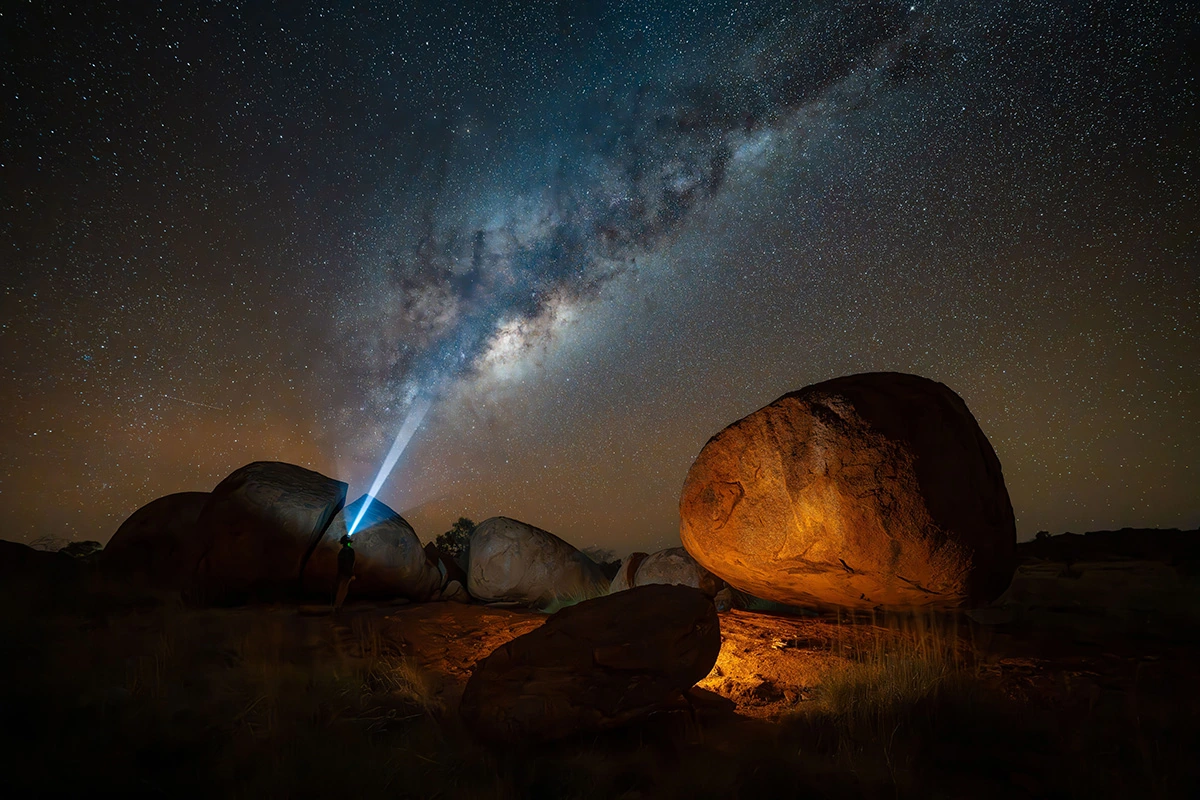
The Northern Territory’s expansive landscapes and low light pollution support high-quality stargazing and astrophotography experiences. Locations such as Uluru and the East MacDonnell Ranges offer guided night sky experiences, with the NT’s panoramic open landscapes presenting opportunities to grow this niche as part of broader nature-based tourism. - Northern Territory Parks and nature-based tourism
Capitalising on our iconic landscapes, the Northern Territory Government is actively seeking new product development and investment opportunities within parks and natural areas. With extensive areas of protected land, including national parks and reserves, there is significant potential to expand high-quality, low-impact tourism experiences that enhance visitor engagement while maintaining environmental integrity.
The recent acquisition of Silkwood near Adelaide River has also created an opportunity for nature-based investment outside of a protected areas framework, with registrations of interest being sought for development proposals. This presents a unique pathway to pilot innovative tourism models that complement conservation outcomes while enabling flexible, sustainable development.

Visitor economy
The Visitor Economy Strategy 2032 sets out the direction for development including specific actions to attract more visitors and deliver increasingly diverse, quality tourism experiences, year-round visitation and regional dispersal.
In 2026-27, the Northern Territory Government is investing more than A$103.2 million in tourism, events and screen production, including:
- Showcasing the Northern Territory through bold, authentic stories that capture the Territory Spirit.
- Using data and insights to focus on audiences that are the best fit for the Northern Territory.
- Activating events, screen and authentic moments to grow awareness and year-round visitation.
- Building partnerships that expand the Territory’s reach with priority audiences.
- Supporting aviation partnerships that grow and stabilise Territory air routes.
Driving growth and investment
Tourism growth in the Northern Territory is guided by the Visitor Economy Strategy 2032, which establishes a clear long-term framework for a whole-of-economy approach. Tourism, major events, national parks and hospitality are positioned as a connected system driving economic growth, jobs and community vibrancy.
The strategy aligns tourism, events and parks under a single vision, enabling coordinated delivery, shared capability and stronger return on investment. This supports high-value experience development, extends length of stay and encourages year-round visitation, while maximising the impact of infrastructure, access and connectivity.
Collaboration between industry, government, Traditional Owners and communities underpins a stable and attractive investment environment, supporting sustainable growth, regional development, and the protection of cultural and natural assets.
By 2032, the Northern Territory aims to achieve an A$3 billion visitor economy, attracting 1.7 million visitors across domestic and international markets - representing average annual growth of 4.2 per cent.
Spotlight on festivals and events
The culture, food, sport and fun-loving spirit of the Northern Territory is on show with a year-round calendar of festivals and events.
Visitors can join the locals at unique events, celebrate Aboriginal heritage at indigenous festivities in remote communities, or experience top-notch sporting events like the V8 Supercars and Darwin Cup Carnival.
Visitors often combine events with visits to Kakadu National Park, Uluru-Kata Tjuta National Park, Alice Springs, Darwin, Katherine and East Arnhem Land.
Festivals and events include:
- Darwin Supercars
- Darwin Festival
- Parrtjima – A Festival of Light
- Great Northern Darwin Cup Carnival
- Desert Harmony Festival
- Darwin Aboriginal Art Fair
- Tatts Finke Desert Race
- MXGP of Australia, Darwin
- Million Dollar Fish
- International Cricket.
Why invest in Tourism
Tourism is a resilient, high-growth sector
Australia's visitor economy continues to demonstrate strong growth and resilience, supported by sustained international and domestic demand and evolving travel preferences. As travellers increasingly seek immersive, nature-based and cultural experiences, the Northern Territory is uniquely positioned to capture this demand. Guided by the Visitor Economy Strategy 2032 and supported by strategic investment, the Territory offers a compelling environment for sustainable tourism investment and long-term growth.
The Territory spirit
The Northern Territory offers a globally distinctive visitor experience defined by the Territory Spirit, an authentic sense of freedom, openness and connection to vast landscapes. This is reflected in vibrant markets, festivals, military heritage and a unique lifestyle that creates a destination both adventurous and welcoming.
Gateway to Asia and multicultural lifestyle
Darwin’s location places the Northern Territory within easy reach of some of the world’s fastest growing visitor markets. Lifestyle and economic connections have shaped multicultural communities, food, markets and festivals, reinforcing the Territory’s role as Australia’s northern gateway for travel, study and business. This proximity supports strong visitor access, including a growing cruise market, with Darwin accommodating year-round cruise activity and serving as first point of entry for international cruise ships entering Australia.
Iconic parks and landscapes
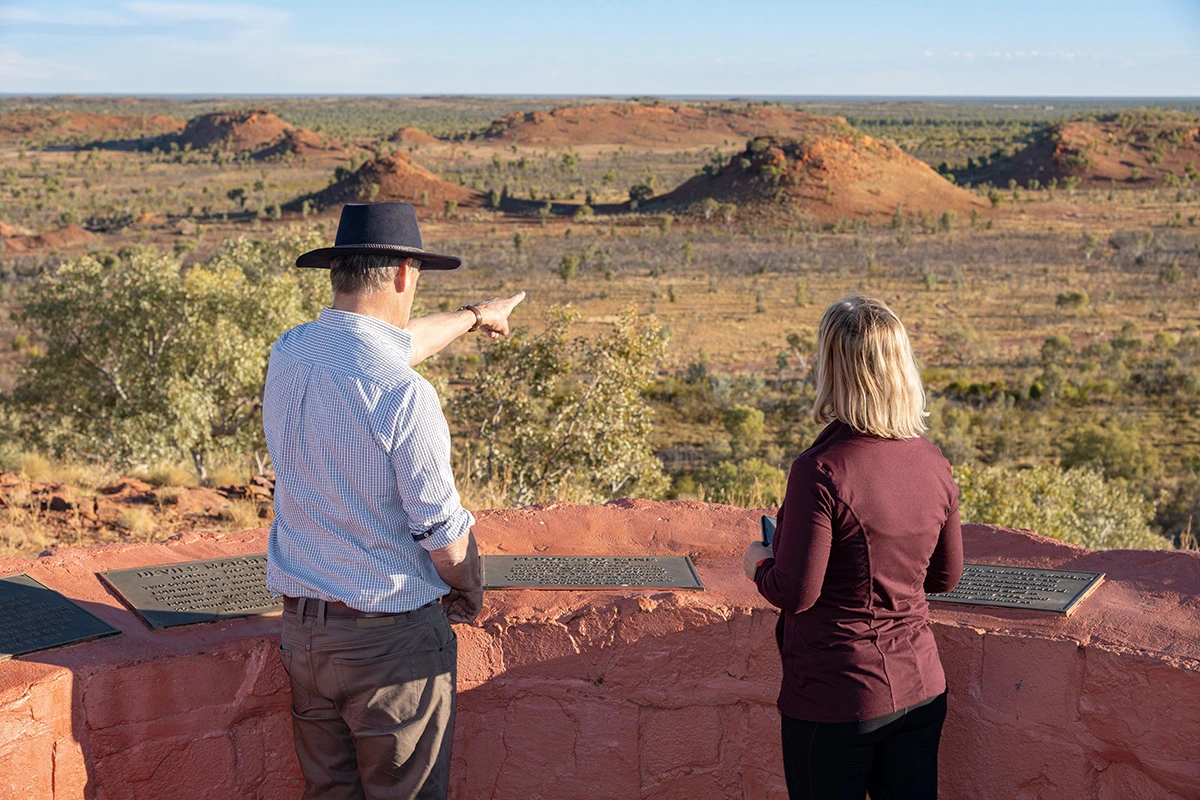
The Northern Territory is home to two UNESCO World Heritage listed sites, Uluru-Kata Tjuta and Kakadu National Parks, alongside Tjoritja/West MacDonnell Ranges, Elsey, Nitmiluk and Litchfield National Parks. These globally recognised destinations, combined with dramatic landscapes and waterholes, deliver immersive nature-based experiences and bucket list adventures unlike anywhere else.
Tourism infrastructure and events
High-quality tourism and entertainment infrastructure underpins the Territory’s visitor economy. This includes a world class convention centre, integrated resort and casino facilities, cruise access, and a strong calendar of major events and attractions spanning Darwin to Alice Springs.
Outback adventure and fishing
Outback adventure is central to the Territory experience, with opportunities to hike, fish, camp and explore by four-wheel drive. Guided experiences support visitors to engage more deeply with the landscapes, environment and stories of the region.
Aboriginal culture – the heart of the Territory
In the homelands of the world’s oldest continuous culture, visitors can connect with Aboriginal peoples and traditions passed down through generations. Experiences led by Traditional Owners and majority Aboriginal owned businesses provide immersive opportunities to engage with culture and Country. Across the Top End and Red Centre, festivals, art and on Country experiences reflect the diversity and significance of Aboriginal culture in the Northern Territory.