Case study: Rise Project Consulting
Revolutionising the global wastewater industry from the Northern Territory
Award-winning Rise Project Consulting (Rise) is transforming wastewater management globally with an innovative solution that is being built, tested, and refined entirely in Australia’s Northern Territory, before commercialisation and manufacturing.
Background
Darwin-based Rise is developing a fit-for-purpose Unmanned Surface Vehicle (USV) that will transform how wastewater ponds are surveyed, managed, and maintained worldwide.
Opportunity
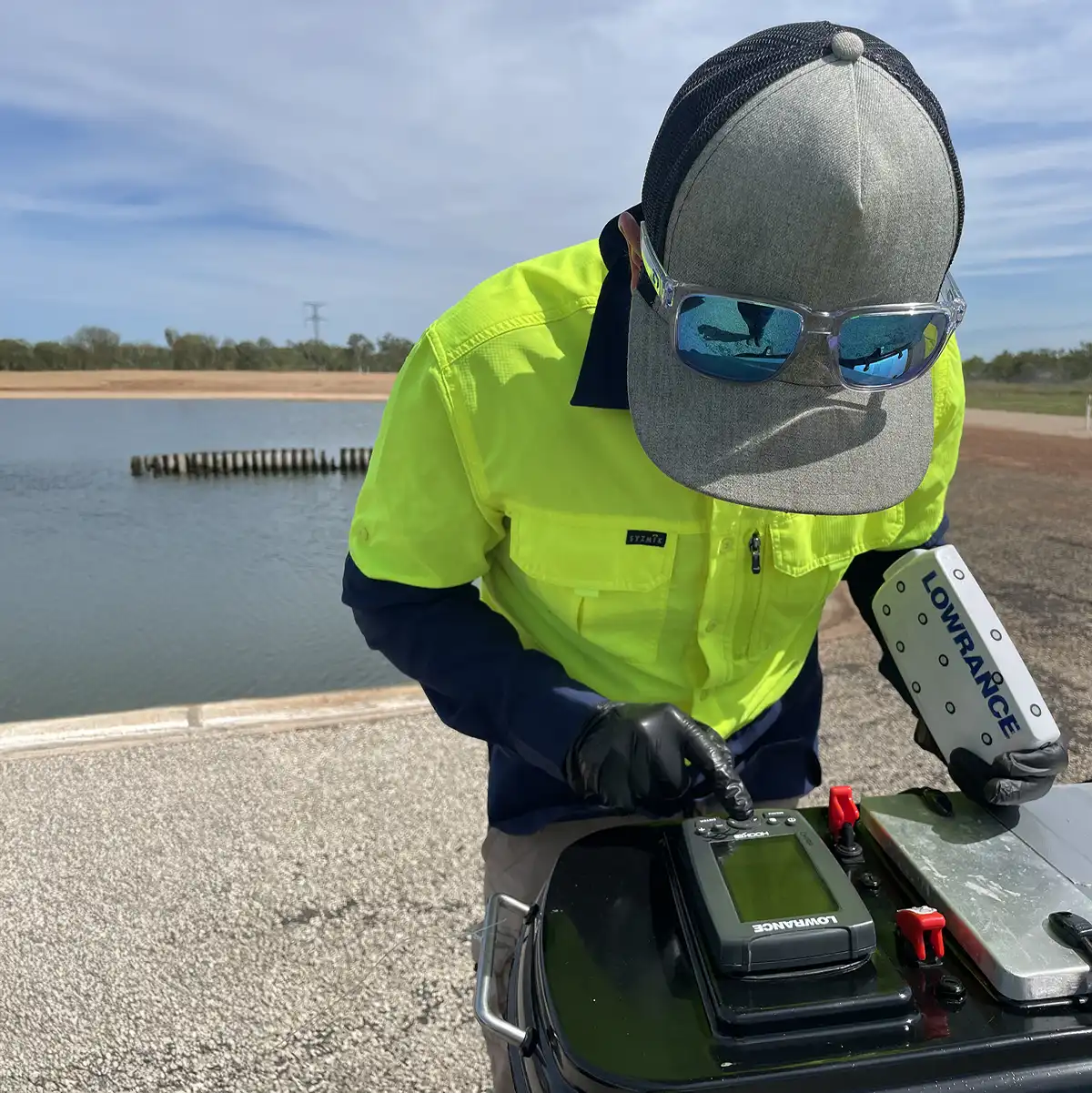
Current wastewater survey methods often include watercrafts with propellors that become entangled in debris or require staff to take measurements by prodding the bottom of wastewater ponds.
These methods are not only outdated but pose risks to worker safety and asset performance.
Approach
Leveraging local talent and Northern Australia’s unique environment, Rise is partnering with Charles Darwin University’s Northern Australia Centre for Autonomous Systems (NACAS) to design and prototype the solution in Darwin—positioning the Territory as a hub for advanced manufacturing in autonomous systems.
By designing a purpose-built USV that floats on top of wastewater (not in it), Rise aims to deliver a safer and more productive method for bathymetric pond surveys.
The USV will be equipped with sonar, GPS, and data logging capabilities to enable high resolution 3D mapping of wastewater ponds. This will enable data-driven decision-making for desludging, maintenance, and upgrades.
Solution
Rise secured funding through the Northern Territory Government backed Advanced Manufacturing Ecosystem (AME) Fund, administered through the Advanced Manufacturing Growth Centre.
The A$360,436 project, which includes matched funding of A$180,218 from the AME Fund, aims to design and test the purpose- built USV for global bathymetric surveys of wastewater ponds.
Outcomes
The Rise USV project introduces a safer, more accurate solution for wastewater pond management, showcasing the Northern Territory’s innovation in remote-area technology.
The collaboration with Charles Darwin University is helping to harness the Territory’s growing reputation in autonomous systems research and development, and the project is expected to create up to 8 local jobs when commercialised.
At-a-glance
180,218
AME fund matched
8
local jobs when commercialised
Established
partnership with CDU